

There is a particular moment in the life of every great luxury brand when it must decide what it truly is. Not what it was, not what its parent company needs it to be — but what it has earned the right to become. For Onitsuka Tiger, that moment arrived on June 10, 2026, when Asics’ board of directors voted to spin off the nearly 80-year-old brand into an independent subsidiary, OT Group Corp., effective January 1, 2027.
On the surface, it looks like a corporate restructuring. Look closer, and it reads like a declaration of identity.
From Wartime Gymnasium to the Champs-Élysées
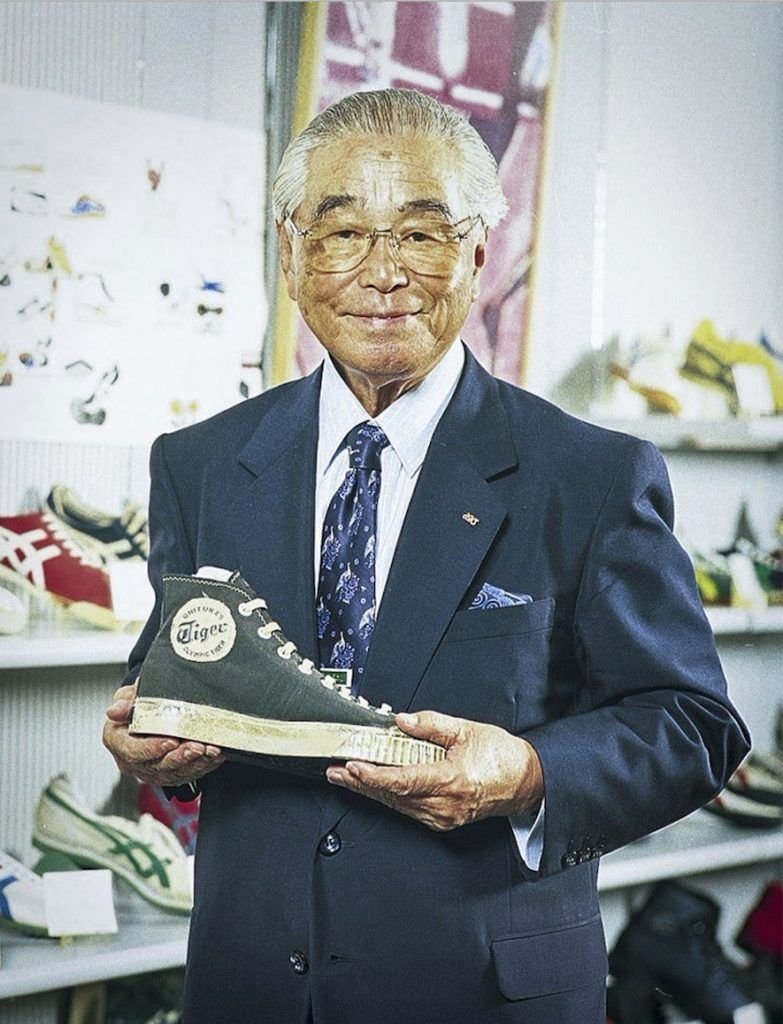
To understand why this separation matters, you have to understand how quietly extraordinary the Onitsuka Tiger story already is. Kihachiro Onitsuka founded the brand in 1949 in Kobe, Japan — a city still rebuilding from the devastation of World War II. His mission was almost poignantly humble: to give Japan’s youth something to do, somewhere to direct their energy. He made basketball shoes and sold them from the boot of his car.
What followed was a masterclass in the slow accumulation of meaning.
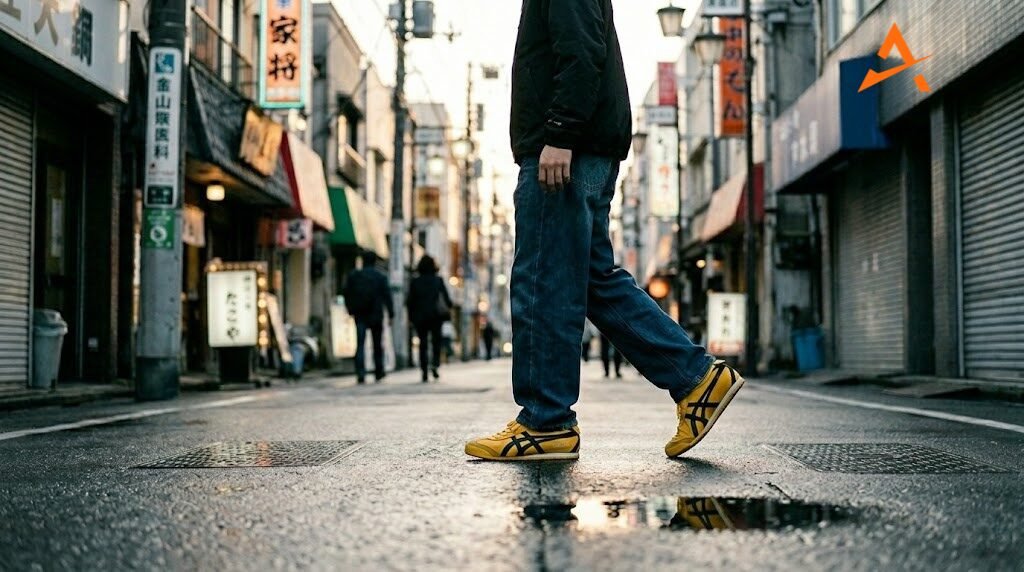
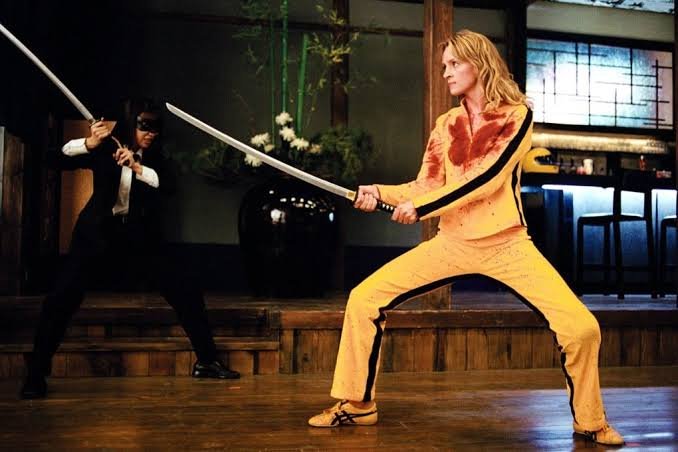
The Mexico 66 debuted ahead of the 1968 Mexico City Olympics, its crossed tiger stripes becoming one of the most quietly iconic silhouettes in footwear history. Bruce Lee wore a yellow-and-black version on screen. Quentin Tarantino immortalised that same colourway on Uma Thurman’s feet in Kill Bill Vol. 1. Neither moment was engineered by a marketing department. Both became permanent cultural fixtures — the kind of provenance that luxury houses spend generations and millions attempting to manufacture, and rarely achieve.
In 1977, the brand was folded into what would eventually become Asics, a performance sportswear giant. For decades, Onitsuka Tiger existed within that corporate architecture — respected, but somewhat muted. Then, gradually, something changed.
The Numbers That Changed Everything
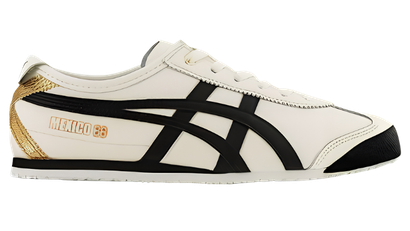
The fashion world’s pivot to clean, flat, low-profile sneakers around 2022 — the era that made the Adidas Samba a cultural phenomenon — handed Onitsuka Tiger something money cannot buy: perfect timing. The Mexico 66 emerged as the sophisticated alternative, sighted on Bella Hadid, Kaia Gerber, and Gigi Hadid. It was retro but not nostalgic. Japanese but globally fluent. Affordable enough to buy, rare enough to feel special.
The commercial results have been staggering. Sales for the year ended December 2025 jumped 43 per cent to 136.5 billion yen — approximately $851 million USD — lifted by fierce demand across Europe, an inbound tourism boom to Japan, and the effect of a weaker yen. In the first quarter of 2026, net sales rose a further 33.8 per cent to 37.8 billion yen, while the profit margin hit an extraordinary 39.6 per cent — the highest of any category within the Asics group.
To put that in context: a brand that was selling footwear from a car boot in post-war Kobe now operates approximately 190 directly owned stores across roughly 160 countries, employing some 2,800 people. It has a flagship on the Avenue des Champs-Élysées in Paris. It showed at Milan Fashion Week. It collaborated with Versace. It launched a fragrance line in November 2025. It counts Momo of K-pop juggernaut TWICE among its ambassadors.
This is no longer a sportswear label with heritage appeal. This is a luxury lifestyle house in formation — and Asics, to their enormous credit, appears to recognise exactly that.
The Case For Independence: Why This Move Is Strategically Brilliant
Brand clarity above all else. The single most important asset in luxury is an unambiguous identity. Under Asics, Onitsuka Tiger has always risked the category confusion of being associated with performance running shoes and technical sportswear — functional, excellent, but not aspirational in the way that a Champs-Élysées flagship demands. As OT Group, the brand can curate every touchpoint — retail, communications, partnerships, product — entirely through the lens of elevated Japanese lifestyle. No compromise. No corporate dilution.
Agility in a trend-sensitive market. Fashion moves fast, and luxury lifestyle moves only slightly slower. Under a large, consensus-driven corporate structure, decisions about new store locations, collection pivots, and brand collaborations can take months. Asics has explicitly cited faster decision-making as a core rationale for the spin-off. In a market where a single collaboration with the right designer can define a season, that agility is worth more than any cost saving.
The upmarket repositioning gets room to breathe. Onitsuka Tiger has spent the past three years making unmistakably luxury moves: the Versace collaboration, the Champs-Élysées flagship, the Nippon Made craftsman-edition lines, the in-store cafes at its Ginza and Shanghai locations. These are the gestures of a house that wants to sit closer to Loro Piana than to Nike. Independence gives the brand the structural credibility to occupy that space — its own holding company, its own headquarters in Kita-Aoyama (Tokyo’s answer to the 8th arrondissement), its own CEO in Ryoji Shoda with a clear mandate.
Return to America, on its own terms. The brand’s exit from the North American market in 2023 was a painful, necessary rationalisation. A Los Angeles flagship — confirmed for the coming year — marks a very different kind of return: deliberate, curated, and anchored in a standalone retail experience rather than wholesale accounts. This is how luxury brands build lasting presence in a new market.
Governance transparency and investor confidence. By separating its accounts, OT Group creates clarity that benefits both itself and its parent. Asics investors can evaluate the conglomerate’s performance sportswear business independently. OT Group can be held accountable — and celebrated — for its luxury lifestyle results. This kind of structural honesty tends to unlock better strategic decision-making at every level.
The Risks: Where the Tiger Could Stumble
No strategic move of this magnitude is without its complications, and intellectual honesty demands that we examine where things could go wrong.
The independence is incomplete — for now. OT Group Corp. is a wholly owned subsidiary of Asics, not a fully independent company. Asics has stated clearly that it is not considering an IPO. This means that while the brand gains operational autonomy, it still answers ultimately to its parent’s shareholders and board. The freedom is real, but it is not absolute. If Asics faces financial pressure — or if the sneaker market experiences a significant correction — the degree of independence granted to OT Group could be quietly revised.
The trend tailwind will not blow forever. Onitsuka Tiger’s extraordinary recent growth has coincided precisely with the dominance of flat, minimal sneakers in global fashion. Trends are, by definition, temporary. The same cultural machinery that elevated the Mexico 66 will eventually move on to the next silhouette. Building a durable luxury house requires the brand to transcend the trend cycle it currently surfs — through craft storytelling, product range diversification, and community building that outlasts any single fashion moment.
The luxury positioning requires sustained investment. Operating a flagship on the Champs-Élysées, running runway presentations at Milan Fashion Week, and maintaining experiential in-store environments is expensive. As an independent entity, OT Group must fund this ambition with its own margins. At 39.6 per cent profitability, those margins are currently exceptional — but sustaining that figure while simultaneously expanding into Los Angeles, Seoul, Milan, and Shinjuku will require disciplined capital allocation.
The brand equity management challenge. Onitsuka Tiger’s mystique has, in part, been preserved by its deliberate scarcity — the sense that these shoes are something you discover, not something that is marketed at you. Rapid global expansion risks the same fate that has befallen other cult footwear brands: ubiquity. Once the Mexico 66 is available on every corner of every capital city, the Tokyo pilgrimage that currently defines the brand experience loses its magic. The line between scaling and overexposing is razor-thin, and navigating it requires the kind of restraint that corporate growth imperatives can make genuinely difficult.
What the Future Could Look Like
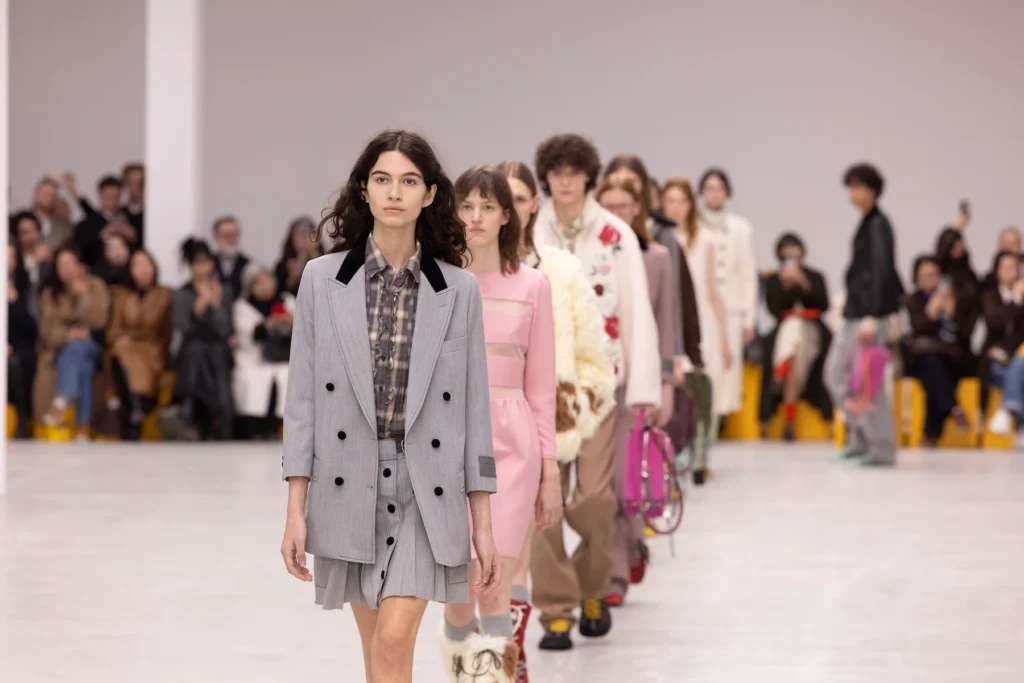
The most compelling version of Onitsuka Tiger’s future is one in which it occupies a space that currently has very few credible occupants: the elevated Japanese lifestyle house with global luxury authority.
Think of it as the meeting point between Maison Kitsuné’s cultural playfulness, Issey Miyake’s craft philosophy, and the heritage gravitas of a brand that predates almost everything on its competitors’ shelves. The fragrance line is a signal in this direction — so are the in-store cafes, the Nippon Made editions, and the Versace partnership. These are not product extensions. They are invitations to inhabit a world.
Over the next five years, watch for several developments. The Tokyo Shinjuku flagship opening on July 10 will be the most important retail moment in the brand’s modern history — a statement of what OT Group believes Onitsuka Tiger can be. The Seoul and Milan openings that follow will test whether that vision translates across markets. And the Los Angeles return will answer the defining question: can the brand win in America not through wholesale ubiquity, but through the patient, experiential model it has mastered in Asia and Europe?
If Onitsuka Tiger can sustain its cultural cachet through the inevitable cooling of the flat-sneaker trend, build product category depth beyond footwear, and maintain the restraint to grow without overexposing — the blueprint for a genuinely new kind of luxury house is already in place.
Kihachiro Onitsuka began with a pair of basketball shoes and a belief that movement could give people dignity. Seventy-seven years later, the brand he built is declaring independence from its own corporate parentage, staking its future on the idea that Japanese craft, cinematic heritage, and luxury aspiration can coexist in a single side-striped silhouette.
The tiger has always known what it is. Now, finally, it has a company built in its image.