

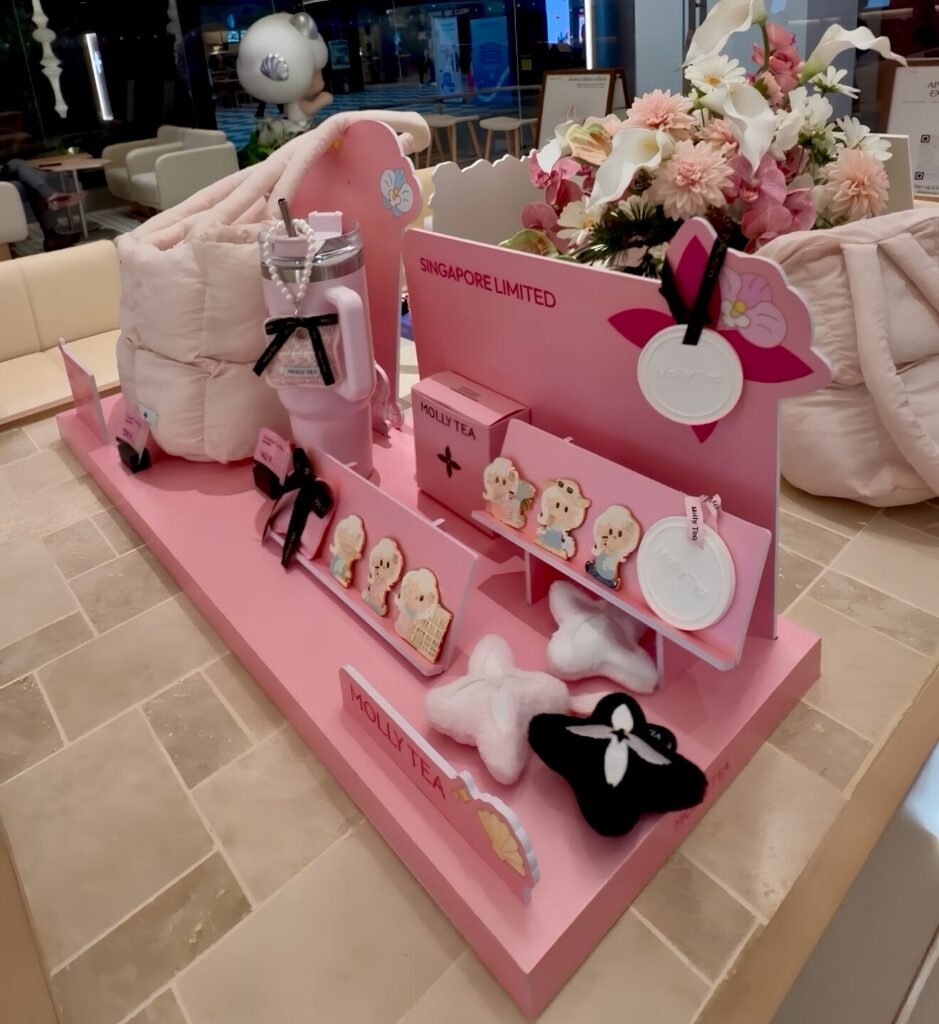
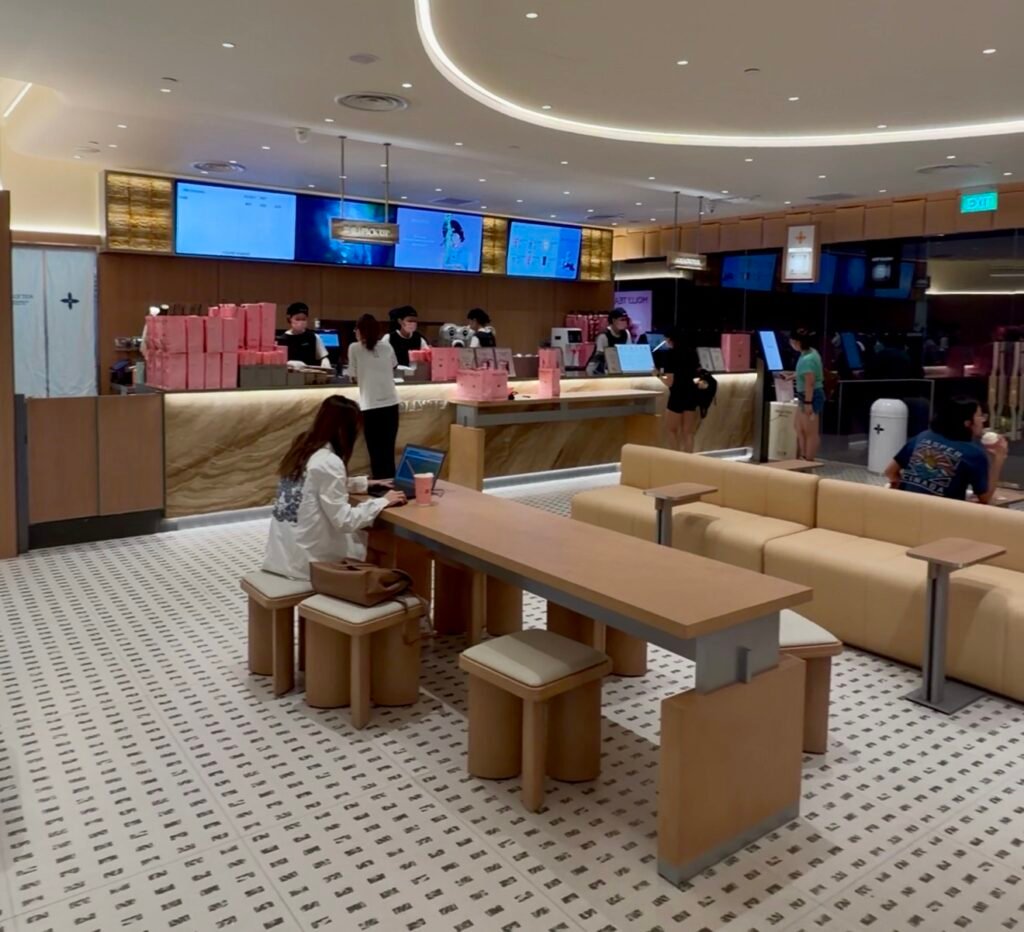
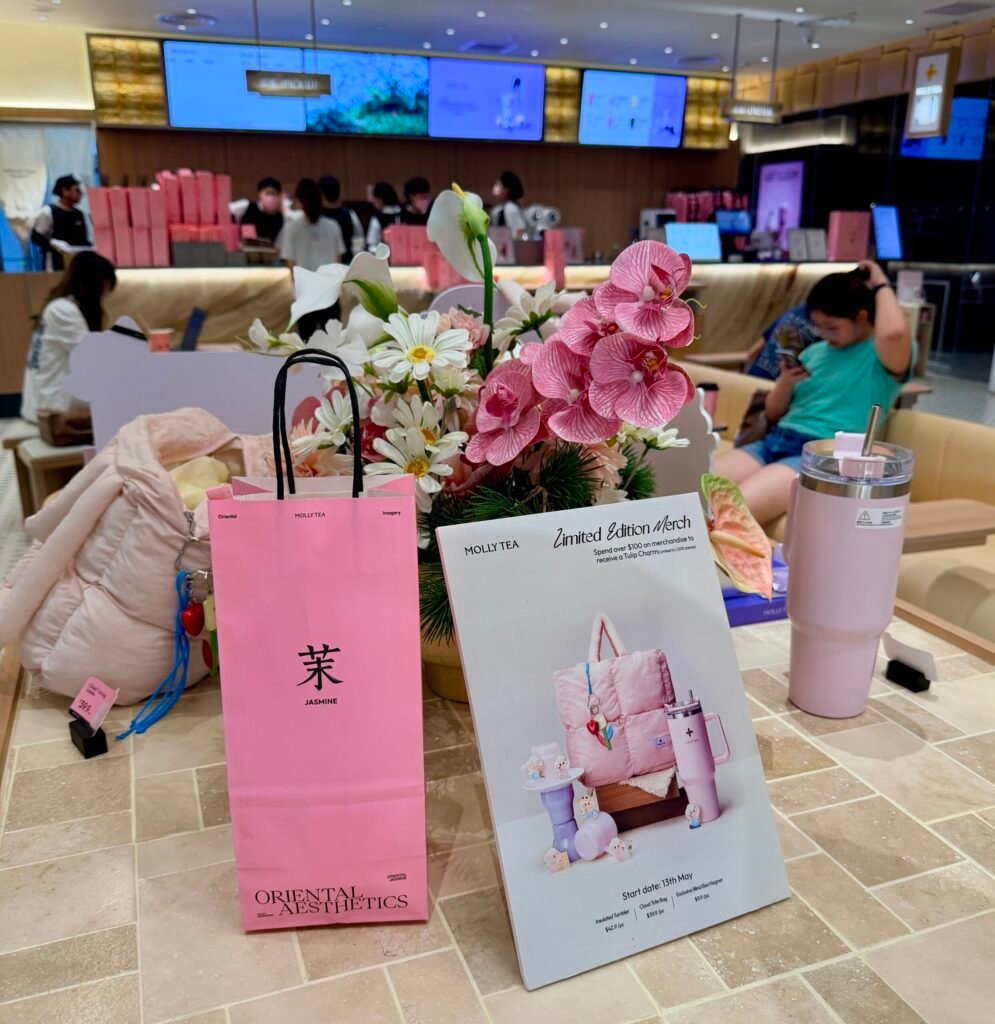
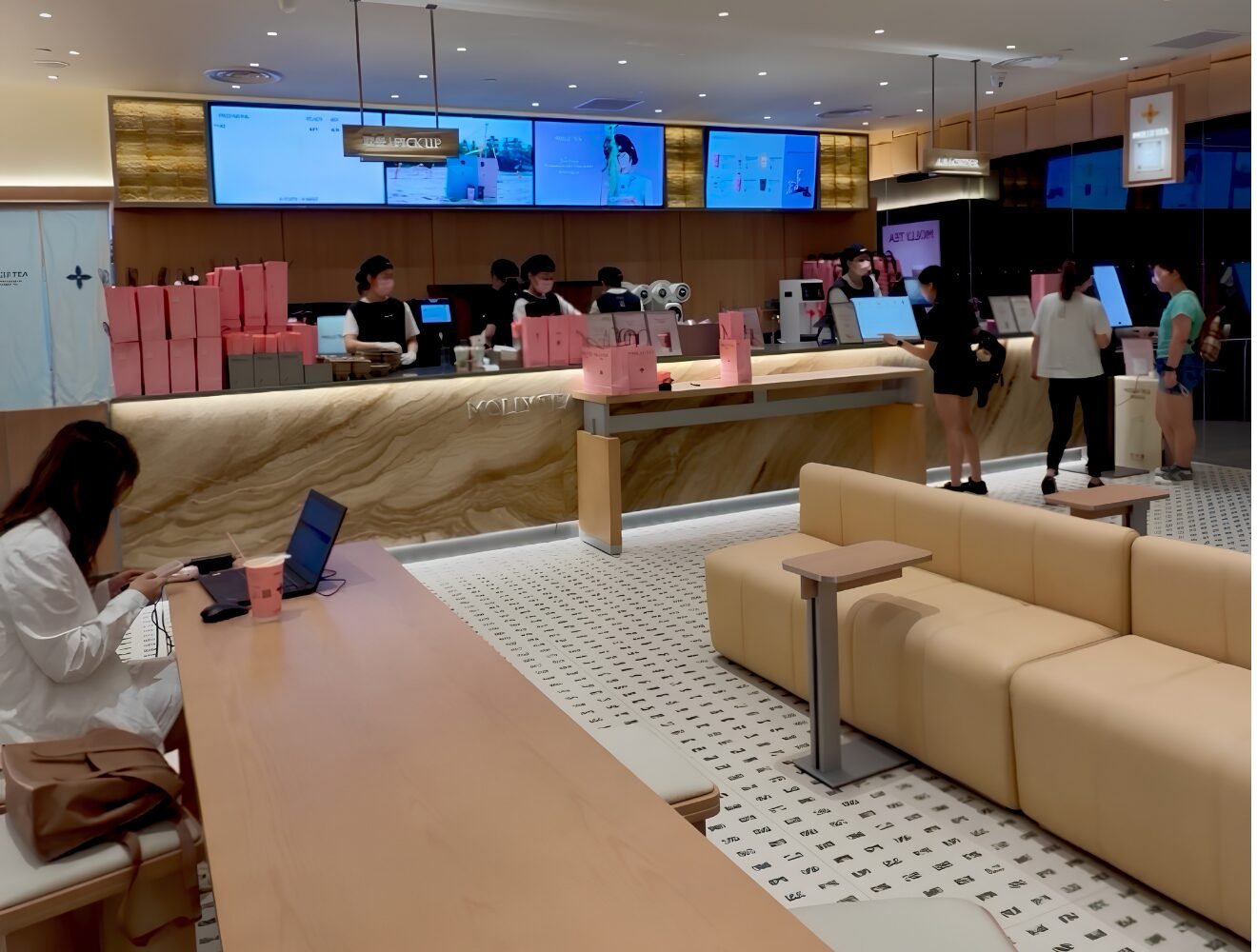
There is a moment, standing inside Molly Tea’s Singapore Land Tower outlet, when you forget you are in a bubble tea shop. The palette is a disciplined blush pink and cream. The seating is upholstered like a hotel lobby. A floral centrepiece — orchids, calla lilies, daisies — anchors the room the way it might at a jewellery trunk show. Along one wall, a merchandise display offers quilted “cloud” tote bags at S$39.90, insulated tumblers at S$42.90, and blind-box magnets, with a limited-run tulip charm reserved for anyone who spends over S$100 on merch. Merch. At a tea shop.
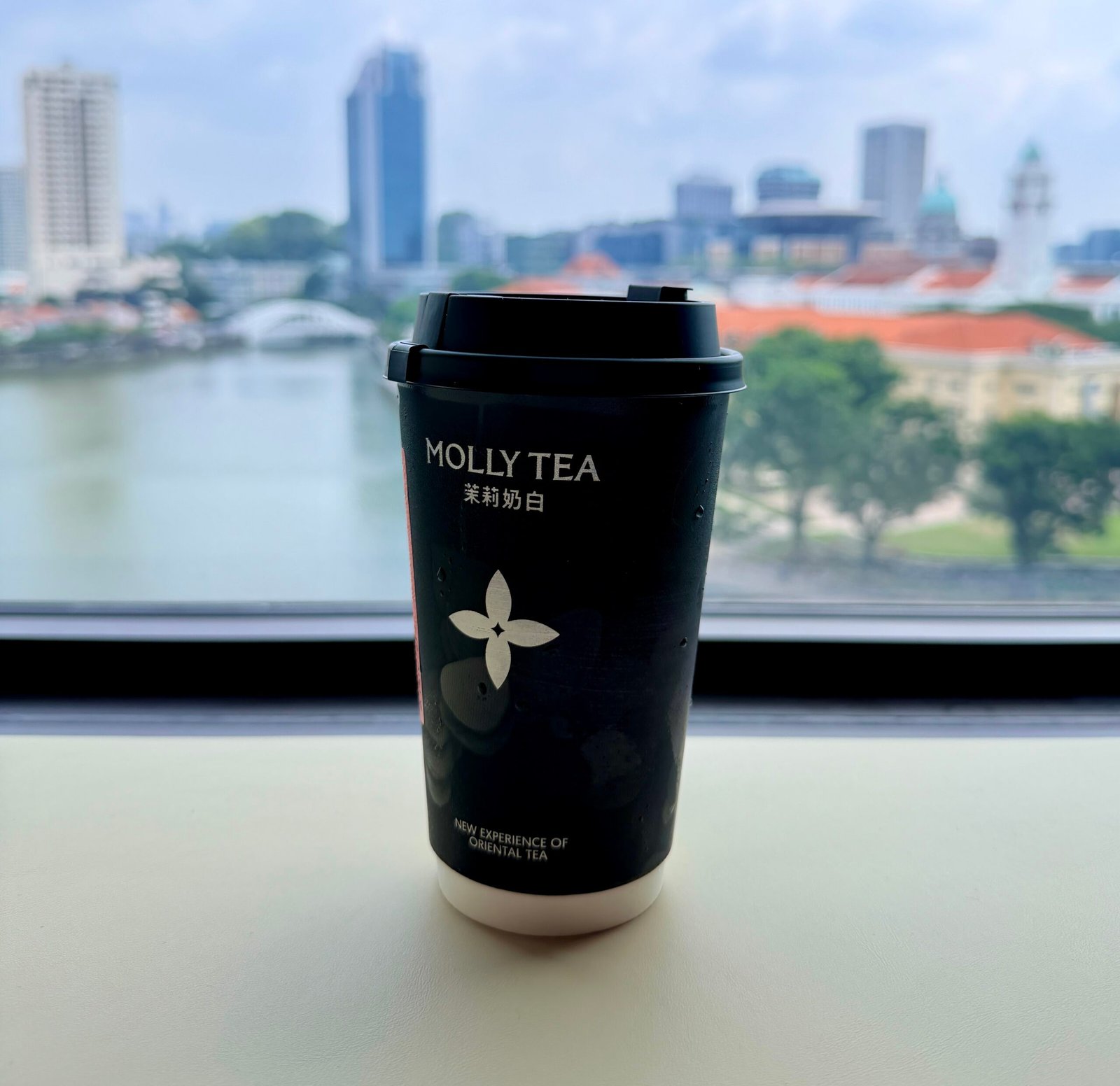
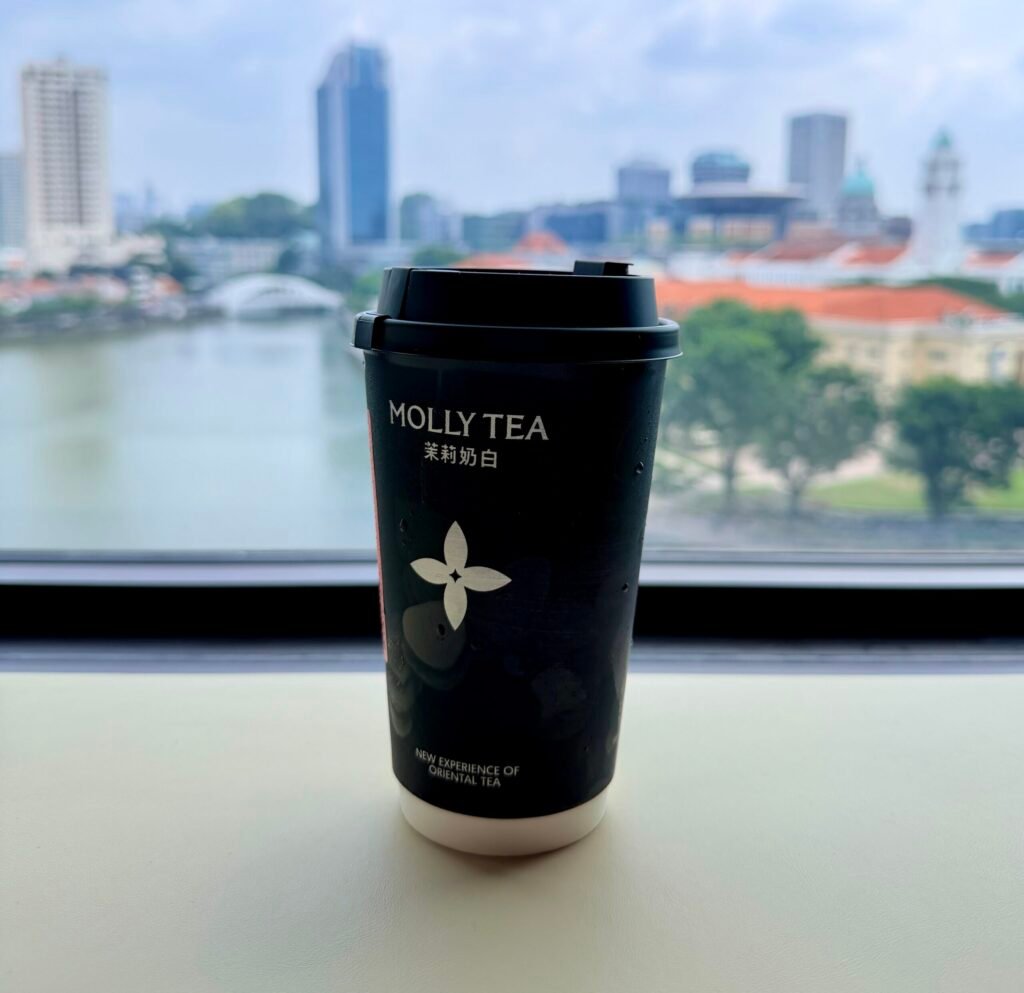
My drink arrived in a matte black cup, a stylised four-petal flower printed in silver beneath the words “New Experience of Oriental Tea.” I carried it back to my desk overlooking the Singapore River, set it on the windowsill against the skyline, and considered the strange truth of what I was holding: that little flower is now at the centre of a legal battle with the most powerful luxury group on earth.
The brand that built itself like a maison
Molly Tea — ????, the name a play on mò lì, jasmine — was founded in Shenzhen in 2021 and has grown at a pace that would make most heritage houses dizzy: more than 2,000 outlets worldwide, from China to Australia, the UK and the US. Its signature Premium Jasmine Milk Tea is built on double-petal jasmine blossoms infused into high-mountain tea through a seven-step scenting process, and the brand positions itself explicitly around “Oriental Aesthetics” — fragrance-led, minimalist, unapologetically photogenic.
Singapore embraced it instantly. When the Orchard Central flagship — Molly Tea’s largest store in Southeast Asia — opened in March 2026, it reportedly moved more than 18,000 cups in its opening weekend, said to be the brand’s highest globally, with launch-week queues stretching hours. The Raffles Place outlet followed in May: over 2,000 square feet, billed as the brand’s largest CBD store in the world, complete with an all-pink pop-up, a gachapon machine, and the mascot Molly in a Singapore-exclusive Merlion suit.
Everything about the experience borrows the grammar of luxury: the monogram-style motif, the scent rituals, the giftable paper bags (mine, a perfect shade of pink, carried a single calligraphic character — ? — like a couture label). It is accessible luxury, executed with real conviction. Which is precisely, it turns out, the problem.
Then came the lawsuit
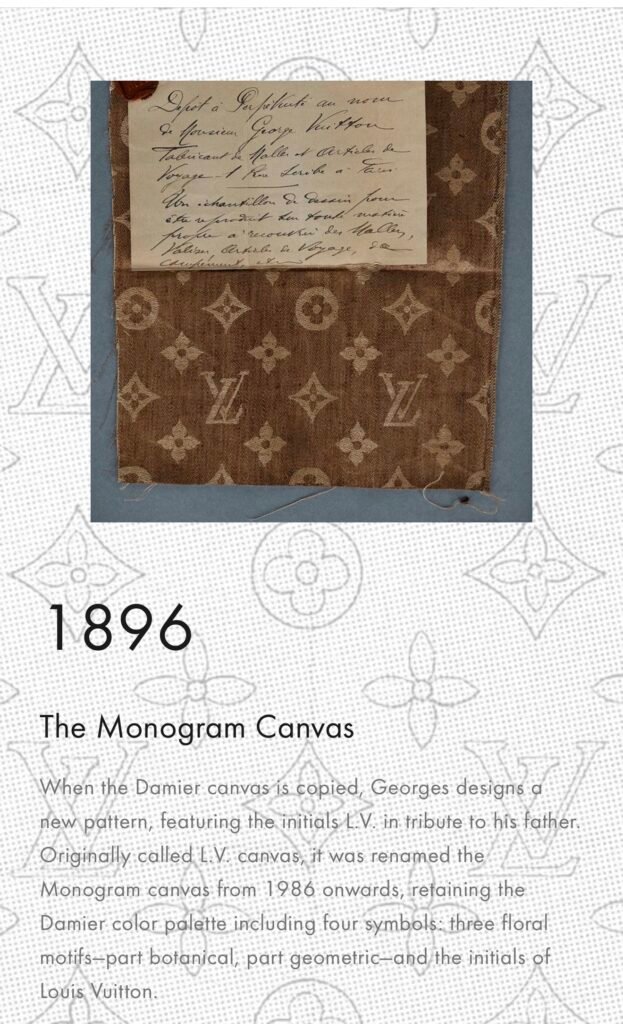
In May 2025, Louis Vuitton filed suit in China, arguing that Molly Tea’s four-petal flower emblem was confusingly similar to the Monogram Flower — the quatrefoil that has anchored Louis Vuitton’s canvas since the 1890s. On 29 June 2026, the Suzhou Intermediate People’s Court agreed, ruling that Molly Tea had infringed seven of Louis Vuitton’s registered trademarks. The tea chain was ordered to pay 10.3 million yuan — roughly S$1.96 million — cease the infringement, and publish corrective statements across its website and social channels.
Molly Tea has said it intends to appeal, and the judgment has not yet taken effect. As of this writing, the four-petal flower still blooms on its cups, its packaging, and its storefronts — including the one I visited.
Notably, Louis Vuitton did not claim Molly Tea copied its full Monogram canvas. It asserted rights over a single floral motif — a window into how the house has long protected its brand: registering not just the composite pattern but each individual visual cue consumers recognise, so that any one of them can be enforced on its own. It is brand architecture as legal architecture, and it is formidable.
Who owns the Quatrefoil flower?
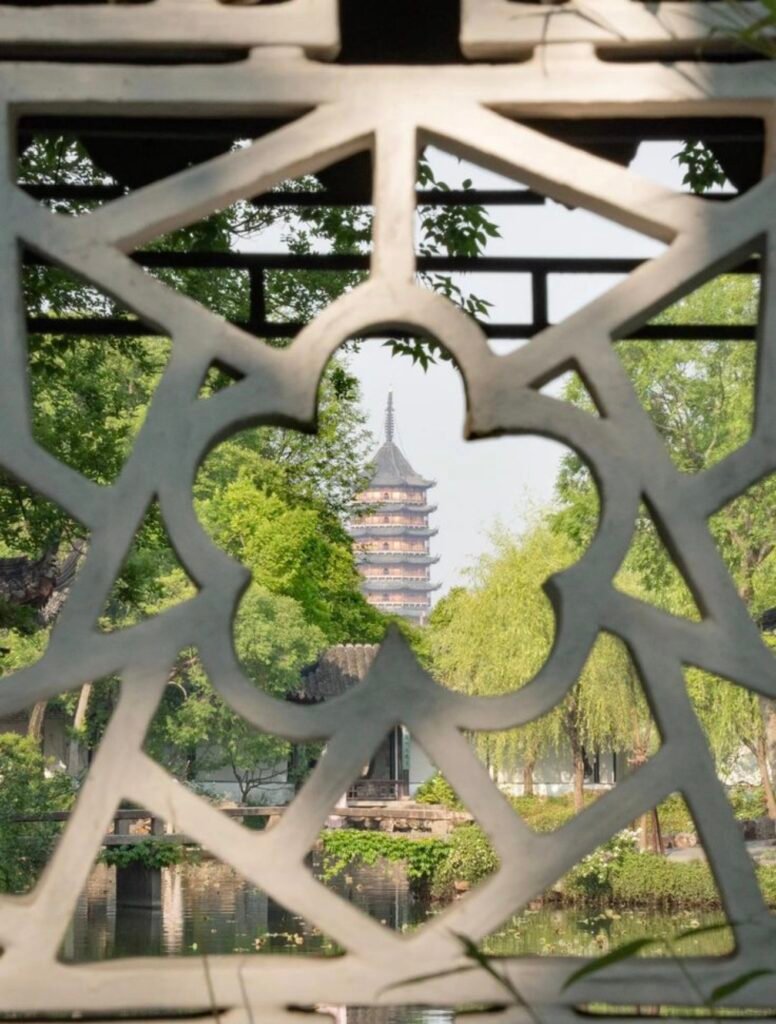
Here is where the story stops being a trademark dispute and becomes something more interesting. Almost immediately after the ruling, Chinese social media pushed back — hard. Users on RedNote began posting side-by-side comparisons tracing the quatrefoil to the baoxiang motif of the Tang Dynasty, a symmetrical “precious flower” design based on lotus and peony. Others photographed a Tang-era rosewood pipa and the four-petal window lattices of the Humble Administrator’s Garden in Suzhou — the very city where the case was decided — all bearing strikingly similar geometry.
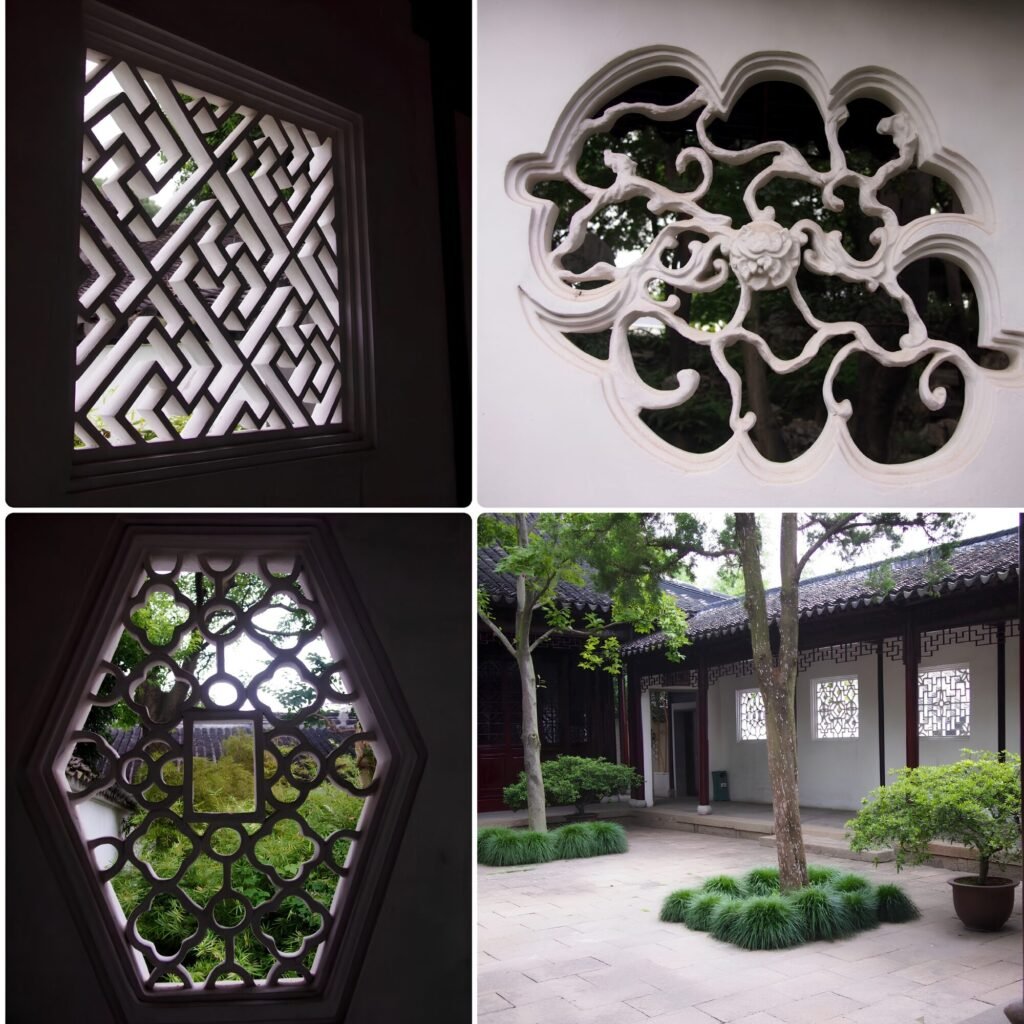
The accusation, distilled: Louis Vuitton registered an element drawn from the public domain of Chinese decorative art, and is now using it to stop a Chinese brand from using it. Some consumers responded the only way modern consumers know how — by deliberately buying Molly Tea in solidarity.
The legal reality is less romantic. China’s trademark system runs on first-to-file: rights go to whoever registers first, and Louis Vuitton’s registrations long predate Molly Tea’s existence. IP lawyers quoted in Chinese media have noted that while traditional cultural elements belong to everyone, specific commercial marks must steer clear of previously registered identifiers. On the law, Louis Vuitton’s position is strong. On sentiment, it is anything but — and in luxury, sentiment is the product.
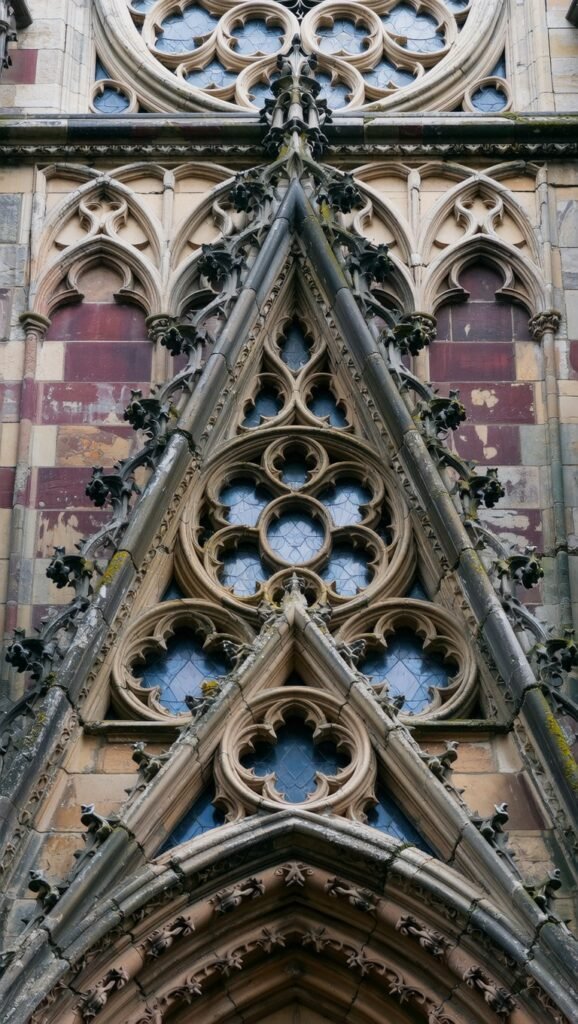
And the sentiment has a point, because the quatrefoil belongs to everyone and no one. Long before it was a monogram, the four-lobed form was carved into the rayonnant tracery of Gothic cathedrals and pierced through the screens and arches of Islamic and Moorish architecture. It frames views in the window lattices of Suzhou’s classical gardens and blooms through Tang Dynasty baoxiang ornament. Nor is Louis Vuitton the only house to have claimed it: Van Cleef & Arpels built an entire dynasty on the Alhambra motif — launched in 1968 and openly named for the Moorish palace that inspired it — while Alfa Romeo has raced under a four-leaf quadrifoglio since the 1920s. The four-petal flower is less a logo than a lingua franca. What LV owns is not the shape, but a specific commercial expression of it — and the line between those two things is precisely what this case, and the public reaction to it, is testing.
Why this matters beyond the tea cup
Strip away the milk foam and this case asks a question the entire industry will have to answer: when heritage houses draw from the world’s shared decorative vocabulary — Tang florals, Islamic geometry, Japanese motifs — and then fence off those elements through trademark portfolios, where does protection end and enclosure begin?
It also signals something about the new Asian challenger brands. Molly Tea did not stumble into Louis Vuitton’s crosshairs; it built itself so fluently in luxury’s visual language — motif, ritual, scent, merch — that the world’s largest luxury group treated a bubble tea chain as a genuine threat to its marks. That, in its own way, is the most backhanded compliment in branding. The old boundary between “fashion house” and “beverage brand” has dissolved; luxury now competes in every category where desire can be designed.
The Verdict
Sitting at my window with that black cup against the river, I found the tea itself quietly excellent — genuinely floral, composed, none of the tannic edge you brace for. But what lingered was the symbol on the cup, and the argument swirling around it. A four-petal flower that may be Tang Dynasty, may be Parisian, and is — for now — legally French.
Whoever wins the appeal, the deeper lesson stands: in 2026, a symbol’s power comes not from who registered it, but from who wears it with conviction. Refinement, after all, is an attitude — and attitude has never needed a trademark.