
The 90-Day Pulse: A Return to Italian Sovereignty
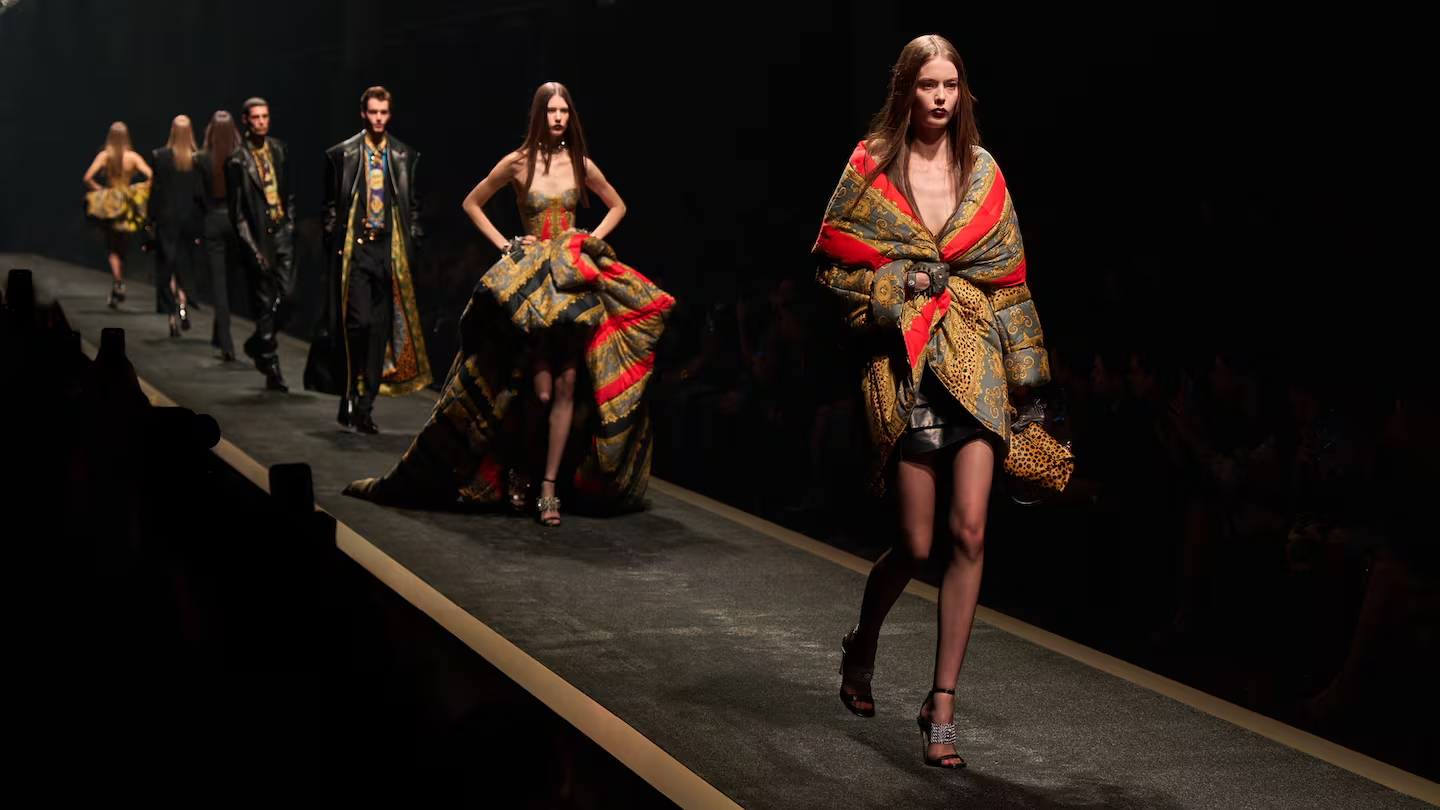
Three months ago in December 2025, the fashion world was abuzz with news that the Prada Group had acquired Versace. Now 3 months in since the deal was finalised, we check in to explore what’s new at Versace.
The Prada Group has moved with surgical precision to bring Versace back to its Milanese roots. The immediate focus has been on operational repatriation rather than loud marketing. By shifting Versace’s leather goods production into Prada’s elite Scandicci manufacturing hub, the group is working to align Versace’s craftsmanship with the “Prada standard,” effectively raising the brand’s quality ceiling to compete with the absolute top tier of European luxury.
Financially, the group has been transparent with investors: 2026 is a year of “calculated dilution.” Prada expects a temporary impact on margins as they clear out excess inventory from the previous era and reinvest heavily in retail infrastructure. This “long-termism” – a hallmark of the Bertelli-Prada family—contrasts sharply with the quarterly pressure of American conglomerates, giving Versace the breathing room to prioritize brand heat over volume for the first time in years.
Strategic Evolution & Mutual Growth
The synergy between the houses is built on the fact that they occupy entirely different psychological spaces for the consumer, allowing for growth without internal competition:
- Versace’s Renaissance: The brand is reclaiming its identity as the provider of “High-Octane Glamour.” Under the strategic guidance of Executive Chairman Lorenzo Bertelli, Versace is being integrated into Prada’s advanced digital and sustainability frameworks. This ensures the brand remains “maximalist” in design but “modern” in its back-end execution.
- Prada’s Ecosystem: For the Prada Group, Versace fills a vital gap. While Prada defines “Intellectual Chic” and Miu Miu captures “Gen-Z Hype,” Versace brings the “Red Carpet Power” and pop-culture magnetism that was previously missing. This creates a balanced portfolio that can dominate diverse market segments simultaneously.
- Creative Transition: While the creative landscape remains in flux following the initial 2025 transition, the focus has shifted toward a “pragmatic glamour”—blending the house’s signature bold codes with a more refined, wearable luxury that justifies a higher price point.
Reshaping the Global Luxury Landscape
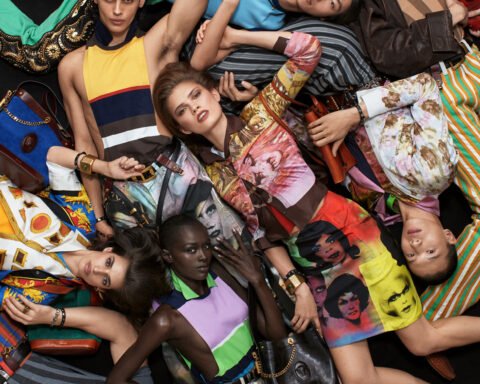
This acquisition has effectively created a “Third Power” in European luxury, challenging the long-standing dominance of LVMH and Kering. It signals a new era of Italian consolidation, where heritage brands are no longer viewed as targets for foreign acquisition but as pillars of a unified national powerhouse.
The deal also serves as a definitive rejection of the “one-size-fits-all” luxury model. The struggles of Versace under its previous American ownership proved that “accessible luxury” tactics often erode the value of heritage houses. By returning to a model of scarcity, high-bar entry, and uncompromising brand DNA, the Prada-Versace alliance is setting the blueprint for luxury survival in 2026. Furthermore, the timing of the deal—following blocked mergers in the US—highlights how European groups are capitalizing on global regulatory shifts to strengthen their grip on the ultra-high-end market.